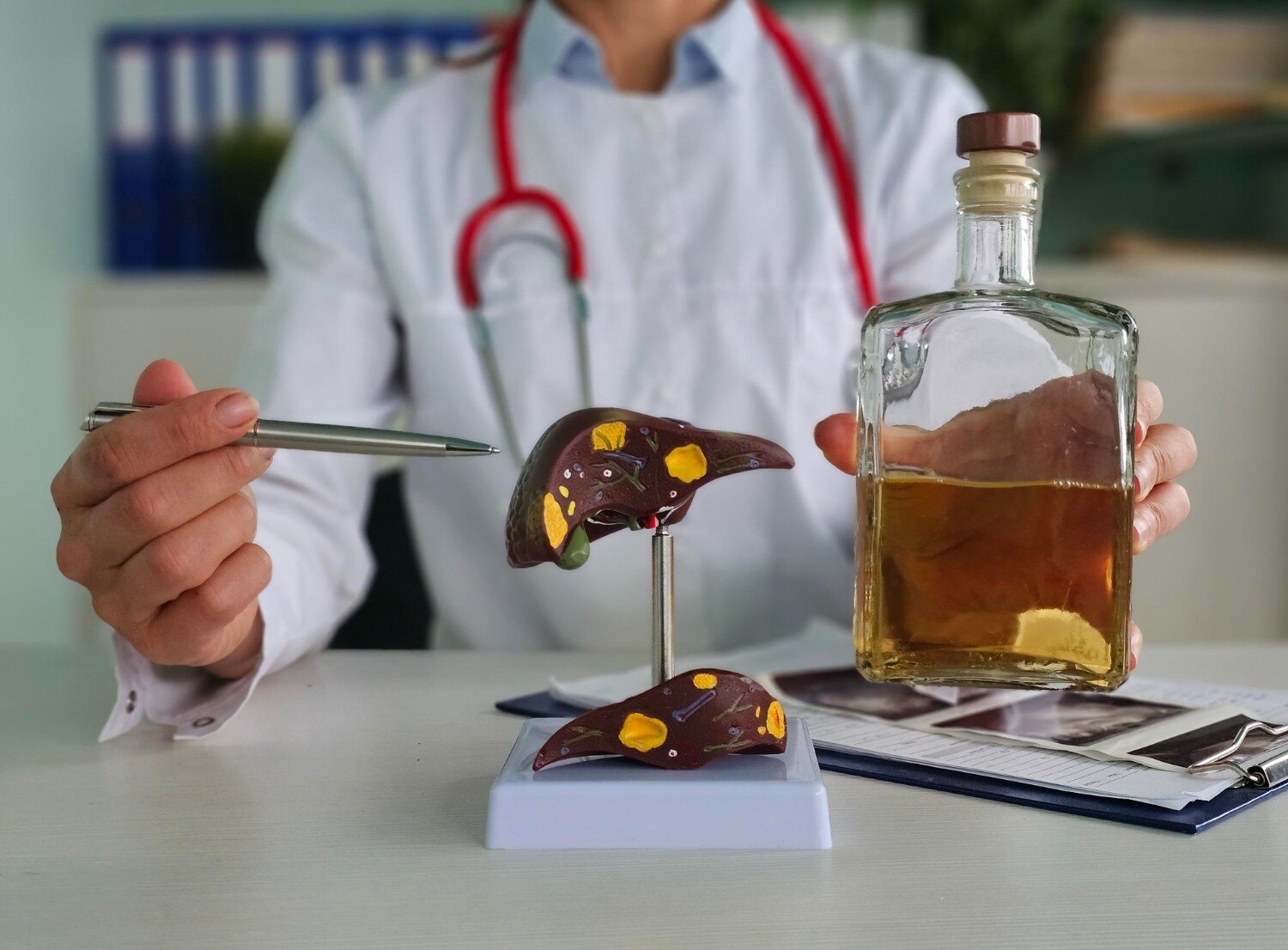
Abnormal liver tests, years of drinking, jaundice, abdominal swelling or a previous alcohol-related hospital stay can make the right next step unclear. By the end, you will know when to seek a liver specialist, when another clinician or emergency department is more appropriate, what an evaluation may include, and how to prepare for the appointment.
Key takeaways
- See a specialist for persistent abnormal liver tests, raised bilirubin, low platelets, or suspected fibrosis.
- Match your care level to alcohol-related hepatitis, cirrhosis, portal hypertension, or transplant needs.
- Seek emergency care for vomiting blood, black stools, confusion, or severe jaundice.
- Choose a team that measures liver function, fibrosis, nutrition, alcohol use, and follow-up needs.
When a liver specialist is the right next step
Book a hepatologist or gastroenterologist if AST or ALT remains abnormal, bilirubin is raised, platelets are low, or tests suggest fibrosis or cirrhosis. Specialist assessment is also sensible after alcohol-related hepatitis, a hospital admission, known portal hypertension, or repeated difficulty reducing alcohol.
- General physician: Start here for initial examination, basic tests and referral when symptoms or results are mild or unclear.
- Hepatologist or gastroenterologist: Assess alcohol-related liver disease, stage fibrosis, interpret blood tests with imaging and plan ongoing liver care.
- Addiction-medicine doctor: Manage alcohol-use disorder, withdrawal risk and medicines that support abstinence.
- Psychiatrist: Treat depression, anxiety, trauma or other conditions that drive drinking, and prescribe suitable mental-health or addiction treatment.
- Counsellor: Build relapse-prevention skills, identify triggers and support behaviour change.
- Dietitian: Address malnutrition, muscle loss, excess weight and safe nutrition during recovery.
A hepatobiliary and liver-transplant surgeon is usually needed for liver cancer, a surgical complication, a portal-hypertension complication requiring a procedure, or transplant evaluation—not simply because alcohol has affected liver tests. Seek coordinated care if several of these needs overlap.
The search phrase “is an alcoholic liver disease for specialist in pune right for me” is answered by severity and care needs, not the clinic title alone. When comparing an alcoholic liver specialist in Pune, ask whether the team stages fibrosis objectively and connects liver treatment with addiction, psychiatric, nutrition and emergency support.
Match the diagnosis to the level of care
The diagnosis determines whether you need monitoring, urgent hospital care, or transplant assessment—not simply whether you need an alcohol related liver disease doctor in Pune.
- Alcohol-associated fatty liver means fat has accumulated without established scarring. Complete abstinence, nutrition support and weight management can improve it substantially; arrange follow-up rather than assuming it is harmless.
- Alcohol-associated hepatitis causes active liver inflammation, often with jaundice and weakness. Hospital assessment may use Maddrey discriminant function and MELD to estimate short-term risk; never self-start corticosteroids, which are unsuitable with conditions such as uncontrolled infection or gastrointestinal bleeding.
- Fibrosis is scar tissue. Early fibrosis can improve substantially with abstinence, while advanced fibrosis requires objective staging and regular surveillance.
- Cirrhosis is extensive scarring that can remain compensated or become decompensated. Ascites, variceal bleeding, jaundice or hepatic encephalopathy require continuing specialist management and possible transplant assessment.
- Portal hypertension can produce enlarged veins, low platelets, ascites or bleeding. A hepatologist or gastroenterologist may arrange endoscopy, medicines or urgent intervention.
- Liver failure means the liver cannot maintain essential functions, reflected by problems such as impaired clotting, confusion, jaundice or kidney complications. This needs hospital-level care and transplant-centre review when appropriate.
- Hepatocellular carcinoma is primary liver cancer, usually requiring a multidisciplinary liver-cancer team and sometimes surgery, ablation, embolisation or transplantation.
A diagnosis does not automatically mean transplantation. Care must also treat alcohol-use disorder through addiction medicine, psychiatry, counselling or medication alongside liver care; continued drinking undermines recovery at every stage.
Know when to skip the clinic and seek emergency care
Go to an emergency department, not a routine appointment with an alcoholic liver specialist in Pune, if you have any of these signs:
- Vomiting blood, black stools or fainting
- New confusion or extreme sleepiness
- Severe jaundice or rapidly increasing abdominal swelling
- Fever with jaundice or abdominal pain
- Very low urine output
- Severe weakness or inability to keep fluids down
| Situation | Why it is urgent | Action |
|---|---|---|
| Vomiting blood, black stools or fainting | Possible internal bleeding and shock | Call emergency services or go to the ER |
| Confusion, extreme sleepiness or severe jaundice | Possible liver failure or encephalopathy | Seek immediate assessment |
| Fever with jaundice, abdominal pain or swelling | Possible serious infection | Do not wait for clinic review |
| Very low urine output or inability to drink | Possible dehydration or kidney injury | Go to the ER |
Stopping alcohol suddenly is also dangerous if you drink heavily every day or have had withdrawal seizures or delirium tremens. After reducing or stopping alcohol, tremor, sweating, agitation, hallucinations, severe vomiting, seizures or confusion require urgent supervised care.
Do not attempt unsupervised detoxification, and do not wait for an outpatient liver appointment when these symptoms appear. Tell emergency staff when you last drank, how much you usually drink and whether withdrawal has happened before.
What the first evaluation should measure
One liver test cannot show how much alcohol has affected you. A liver specialist for alcohol damage in Pune will take a detailed history, examine you for jaundice, abdominal fluid, enlarged liver or spleen, muscle loss, tremor and confusion, then assess withdrawal risk and nutrition.
Bring previous blood reports, ultrasound or scan images, discharge summaries, vaccination records, and every medicine or supplement you take. Be ready to state your current alcohol amount and pattern, date and time of your last drink, morning drinking, previous tremors, sweating, seizures or hallucinations, hospitalisations, medical conditions, and attempts to reduce drinking.
Likely investigations include:
- AST, ALT, bilirubin, albumin and alkaline phosphatase
- Complete blood count, including platelet count
- INR, kidney function and glucose
- Hepatitis B and hepatitis C tests
- Abdominal ultrasound
- FibroScan or another elastography test
- CT or MRI when ultrasound, symptoms or examination indicate a need
AST, ALT, bilirubin, albumin, platelet count and INR are interpreted together. No single result proves alcohol caused the injury or stages fibrosis. Normal AST and ALT do not rule out advanced fibrosis or cirrhosis.
FibroScan measures liver stiffness, not alcohol damage itself. Inflammation, congestion, cholestasis or recent alcohol-related injury can temporarily raise stiffness, so the specialist must interpret the reading alongside your history, examination and blood results.
How to choose a Pune team and know whether follow-up is needed
Choose an alcohol related liver disease doctor in Pune by asking what happens after the consultation, not by relying on the word “specialist.” Compare whether the team can stage fibrosis objectively, make a medically supervised withdrawal plan, and provide addiction-medicine, psychiatric, counselling and nutrition support.
| Capability | Question to ask | Why it matters |
|---|---|---|
| Fibrosis and causes | Will you use FibroScan or another elastography method, plus viral hepatitis testing? | Normal enzymes do not exclude advanced fibrosis. |
| Withdrawal and nutrition | Who manages withdrawal risk, alcohol-use disorder, calories, protein and thiamine? | Sudden stopping can cause seizures or delirium; malnutrition worsens liver disease. |
| Complications and escalation | Can you arrange endoscopy for varices, liver-cancer surveillance, interventional radiology, intensive care and transplant evaluation? | Delayed referral can turn bleeding, ascites or liver failure into an emergency. |
Cirrhosis needs continuing checks for ascites, varices, encephalopathy, malnutrition and hepatocellular carcinoma; cancer surveillance generally uses liver ultrasound every six months. Ask how urgent advice is provided. Dr Amol Jadhav's Comprehensive Liver Care Center can be considered for coordinated hepatobiliary assessment or referrals, but ask specifically how alcohol-use treatment and emergencies are handled.
Avoid fasting, “liver-detox” products and high-dose herbal supplements. A liver specialist for alcohol damage in Pune is the right fit when the team matches your liver stage, withdrawal risk and need for long-term follow-up.
Related services
Alcoholic Liver Disease Specialist in Pune, PCMC, Maharashtra Dr Amol Jadhav is one of the leading and best liver specialist doctor in Pune, PCMC and Maharashtra. View service → |
Liver Cancer Specialist in Pune, PCMC, Maharashtra Liver cancer treatment can include surgery, chemotherapy, radiation therapy, and other treatments. View service → |
Frequently asked questions
When should I see an alcoholic liver specialist in Pune?
Book a hepatologist or gastroenterologist when AST or ALT remains abnormal, bilirubin is raised, platelets are low, or tests suggest fibrosis or cirrhosis. Specialist assessment is also appropriate after alcohol-related hepatitis, hospital admission, known portal hypertension, or repeated difficulty reducing alcohol.
What level of care do I need for alcohol-related liver disease?
Your diagnosis and severity determine the right level of care. A specialist clinic can assess abnormal tests and suspected fibrosis, while advanced cirrhosis, portal hypertension, severe alcohol-related hepatitis, or possible transplant needs require a team with hepatobiliary and transplant expertise.
When should I skip a clinic and seek emergency care?
Go to emergency care for vomiting blood, black or tarry stools, severe confusion, fainting, severe abdominal swelling with breathing difficulty, rapidly worsening jaundice, or intense abdominal pain with fever.
What should the first liver evaluation measure?
Ask for assessment of liver enzymes, bilirubin, albumin, prothrombin time or INR, complete blood count with platelet count, kidney function, viral hepatitis tests, ultrasound, and fibrosis or cirrhosis risk. The consultation should also review alcohol intake, nutrition, medicines, withdrawal risk, and follow-up timing.
Keywords