The right treatment depends on whether a common bile duct stone is confirmed, whether infection is present, and whether the stone can be removed safely through an endoscope or during surgery. By comparing the tests, urgency, procedure choices and follow-up plan, you can ask more useful questions before agreeing to treatment.
Key takeaways
- A widened bile duct does not prove that a stone is lodged inside it.
- Fever, jaundice and severe upper-abdominal pain need urgent medical assessment.
- ERCP removes many common bile duct stones without open surgery.
- Compare emergency access, ERCP expertise and surgical backup before choosing care.
Is the stone in the gallbladder or the common bile duct?
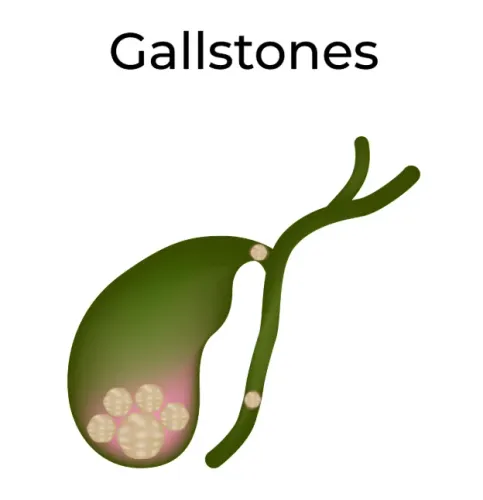
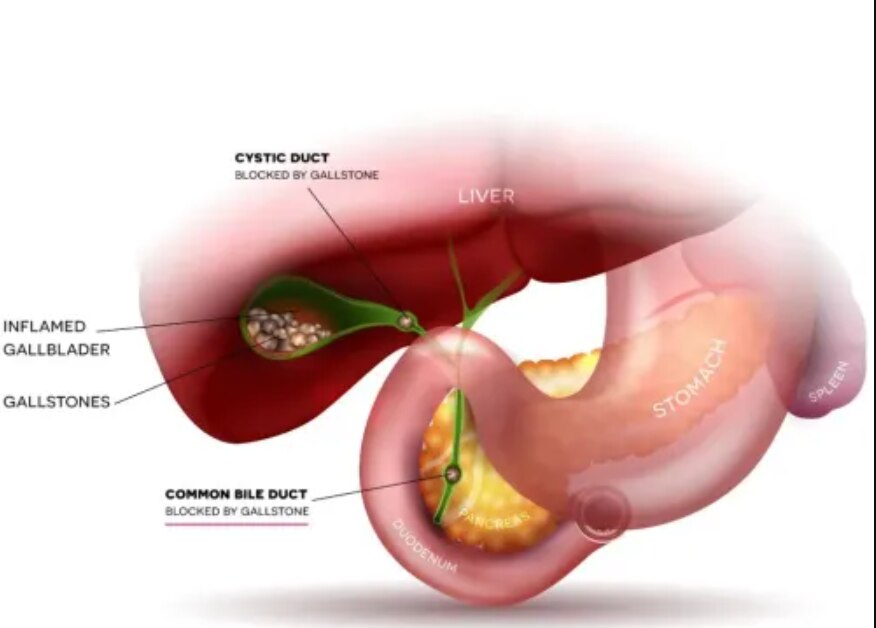
An ultrasound can show stones in the gallbladder and a widened bile duct, but it can miss a stone inside the duct. Doctors combine the scan with liver blood tests, especially bilirubin, alkaline phosphatase and liver enzymes.
If suspicion remains, magnetic resonance cholangiopancreatography (MRCP) or endoscopic ultrasound (EUS) can confirm a common bile duct stone without the risks of an invasive procedure.
A stone confined to the gallbladder does not leave the duct clear if a second stone has already migrated. Doctors recommend clearing a confirmed duct stone, or a strongly suspected obstructing stone, when there is:
- Jaundice or rising bilirubin
- Fever, chills or suspected cholangitis
- Persistent right-upper-abdominal pain or vomiting
- A widened duct or visible stone on imaging
- Pancreatitis caused by blockage
A normal scan and improving blood tests can support observation while doctors investigate another cause. A confirmed duct stone still needs a treatment plan because it can move, block bile flow or trigger infection.
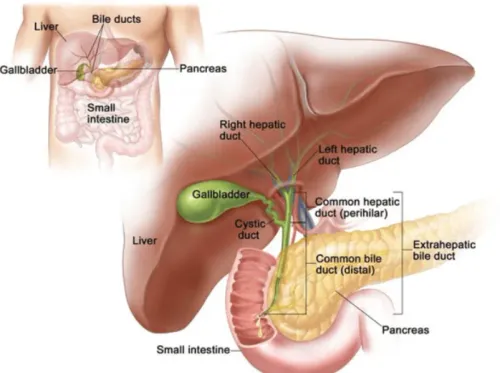
For common bile duct stone treatment in Pune, ask whether MRCP or EUS will be used before ERCP when the diagnosis is uncertain. ERCP is primarily a treatment: an endoscope reaches the duct, and a balloon or basket removes the stone.
It can cause pancreatitis, bleeding, infection or perforation, so doctors avoid using it only to look.
When does a bile duct stone require emergency treatment?
Fever or shaking chills with jaundice is an emergency: go to a hospital emergency department immediately, rather than waiting for a routine appointment with a bile duct stones specialist in Pune. A blocked duct can become infected, causing acute cholangitis, sepsis, or rapid organ failure.
Seek urgent care as well for severe or persistent right-upper-abdominal pain, repeated vomiting, new confusion, faintness, unusual drowsiness, or low blood pressure. These symptoms can signal worsening infection, obstruction, or pancreatitis.
- Call emergency services for confusion, collapse, breathing difficulty, cold clammy skin, or suspected shock.
- Do not drive yourself if you are faint, confused, or severely unwell.
- Take your medication list, previous scan reports, and details of fever, pain, vomiting, and jaundice.
- Do not delay care to arrange an outpatient scan or specialist consultation.
At hospital, clinicians usually check blood counts, bilirubin, liver enzymes, kidney function, lactate, and blood cultures, then use ultrasound or another scan to assess blockage. Treatment can include intravenous fluids, antibiotics, pain control, and urgent drainage of the bile duct.
ERCP is commonly used to remove the stone or place a biliary stent when infection and obstruction prevent immediate clearance.
A stent is a temporary bridge, not the end of treatment. Before discharge, obtain a written date and plan for stone removal, repeat ERCP, surgery, or stent removal or exchange; a forgotten stent can block, migrate, and cause another infection.
How do doctors choose between ERCP, surgery and observation?
The choice turns on whether the stone is proven, whether bile is infected or blocked, and whether you can safely undergo anaesthesia and surgery.
| Option | What doctors consider | Usual role |
|---|---|---|
| Therapeutic ERCP | Cholangitis, jaundice, an accessible stone, altered anatomy, surgical risk | Endoscopic extraction with a balloon or basket; a stent may restore drainage |
| Laparoscopic common bile duct exploration | Stone size and number, duct anatomy, local expertise, and a gallbladder still needing removal | One operation removes the gallbladder and clears the duct |
| Open bile duct surgery | Very large or impacted stones, failed endoscopic or laparoscopic clearance, severe adhesions, injury or stricture | Exploration, repair or reconstruction when less invasive methods are unsuitable |
| Observation | No confirmed duct stone, reassuring tests, no obstruction or infection, and a clear reason to avoid intervention | Monitoring with defined follow-up; not a substitute for treating cholangitis |
Therapeutic ERCP is favoured when infection requires rapid drainage or the patient’s surgical risk is high. Doctors usually avoid diagnostic ERCP when MRCP or endoscopic ultrasound can confirm the diagnosis without its risks of pancreatitis, bleeding, infection and perforation.
Laparoscopic exploration can avoid a separate ERCP and second admission, but it requires an experienced biliary team. For bile duct surgery in Pune, ask which operation is planned, whether laparoscopic gallbladder removal is included, and whether you might need a drain, stent or open conversion.
After duct clearance, a fit patient with a gallbladder still present usually needs laparoscopic cholecystectomy during the same admission or soon afterward.
What happens during ERCP, and what treatment may follow it?
ERCP is a treatment procedure, not just a scan. Under sedation or anaesthesia, a flexible endoscope passes through your mouth into the duodenum. Contrast outlines the bile duct on X-ray, and the doctor may cut the sphincter (endoscopic sphincterotomy), then pull the stone out with a balloon or basket.
| Test or procedure | Main role | Important risk |
|---|---|---|
| MRCP | MRI images the bile ducts without entering them | No procedure-related pancreatitis; MRI is unsuitable for some implants |
| Endoscopic ultrasound | Uses an ultrasound probe on an endoscope to confirm small stones | Sedation and endoscopy risks, but fewer treatment complications |
| ERCP | Removes stones or restores bile drainage | Pancreatitis, bleeding, infection and, rarely, perforation |
If the stone is large, impacted or difficult to extract, mechanical lithotripsy crushes it. Cholangioscopy-guided laser or electrohydraulic lithotripsy can fragment stones under direct vision. A planned second ERCP may complete clearance.
A temporary biliary stent keeps bile flowing when swelling, infection or residual stone blocks drainage. It requires a documented removal or exchange date; an abandoned stent can clog and cause infection.
ERCP does not remove stones remaining in the gallbladder. If you are fit for surgery, laparoscopic gallbladder removal is usually advised during the same admission or soon afterward. That two-stage approach is common bile duct stone treatment in Pune, although laparoscopic duct exploration can clear the duct and remove the gallbladder in one operation.
How can you compare bile duct stone care in Pune and PCMC?
Choose the team that can handle a failed plan, not merely perform the first procedure. Ask whether it distinguishes a suspected stone from a confirmed obstruction and discusses ERCP, laparoscopic common bile duct exploration, observation, and open surgery according to stone size, cholangitis, jaundice, surgical risk, and whether your gallbladder remains.
| Capability | Question to ask | Why it matters |
|---|---|---|
| Urgent drainage | Can you arrange ERCP, anaesthesia, and hospital admission quickly? | Infection with obstruction needs timely drainage. |
| Advanced endoscopy | Can you fragment or remove large or impacted stones, and place a stent? | One standard extraction attempt may not clear a difficult stone. |
| Biliary surgery | Do you perform laparoscopic common bile duct exploration? | A one-stage operation can avoid separate ERCP in selected patients. |
| Surgical backup | What happens if ERCP fails or causes a complication? | You need a defined route to bile duct surgery in Pune, not a referral made during crisis. |
A biliary stone doctor PCMC should also give you the stent’s removal or exchange date in writing. A bile duct stones specialist in Pune should explain whether gallbladder removal is needed after duct clearance and who will provide follow-up.
Dr Amol Jadhav's Comprehensive Liver Care Center may be relevant when you want one consultation to assess advanced endoscopy, biliary surgery, and escalation planning rather than choosing a procedure before reviewing the whole case.
Related service
Bile Duct Stones Treatment Specialist in Pune, PCMC, Maharashtra Bile duct stones are gallstones in the bile duct. They can start in the gallbladder and migrate into the bile duct or they can form in the bile duct... View service → |
Frequently asked questions
How do doctors tell whether a stone is in the gallbladder or common bile duct?
They combine ultrasound findings with bilirubin, alkaline phosphatase and liver enzyme results. If uncertainty remains, they may use MRCP or endoscopic ultrasound to look for a duct stone.
When does a bile duct stone require emergency treatment?
Seek urgent assessment for fever or chills with jaundice, severe or persistent upper-abdominal pain, confusion, vomiting or low blood pressure. These symptoms can indicate an infected blocked bile duct.
How do doctors choose between ERCP, surgery and observation?
The choice depends on evidence of duct blockage, infection, stone size and number, previous procedures, surgical risk and whether gallbladder removal is also needed. Observation is unsuitable when infection or ongoing obstruction is present.
What happens during ERCP, and what treatment may follow it?
A specialist passes an endoscope through the mouth to the duodenum, injects contrast into the bile duct and removes the stone with a balloon or basket. A temporary stent or later gallbladder surgery may be needed.
How can you compare bile duct stone care in Pune and PCMC?
Ask whether the centre provides urgent imaging, ERCP, anaesthesia, stone-removal equipment, biliary stents, blood testing and hepatobiliary surgical backup. Confirm who manages complications and follow-up.
Keywords